Predicting selective herbicide activity with machine learning
The agrochemical industry is facing growing challenges around resistance, stringent regulations, and pressures to reduce the time and cost of…

The agrochemical industry is facing growing challenges around resistance, stringent regulations, and pressures to reduce the time and cost of…
The launch of StarDrop 8 adds powerful real-time collaboration to our medicinal chemistry toolkit for molecule design, optimisation and data…
What value does AI offer in drug discovery? The potential is huge: To learn more about the value we’re seeing…
When evaluating any new technology, it is important to establish how you will validate whether it will deliver a return…
What is Derek Nexus? Developed by Lhasa Limited, Derek Nexus is an expert-knowledge based system that draws on over 40…

What’s the purpose of a predictive model? What’s the value of predictive models for drug discovery? Most of the undergraduate…
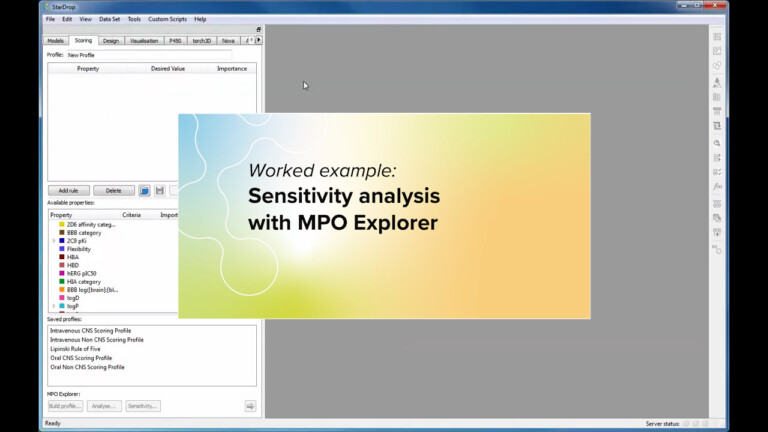
In this example, we will use the Sensitivity Analysis tool in StarDrop’s MPO Explorer module to check if the ranking of compounds in a data set is sensitive to any of the criteria or importance values in a scoring profile.
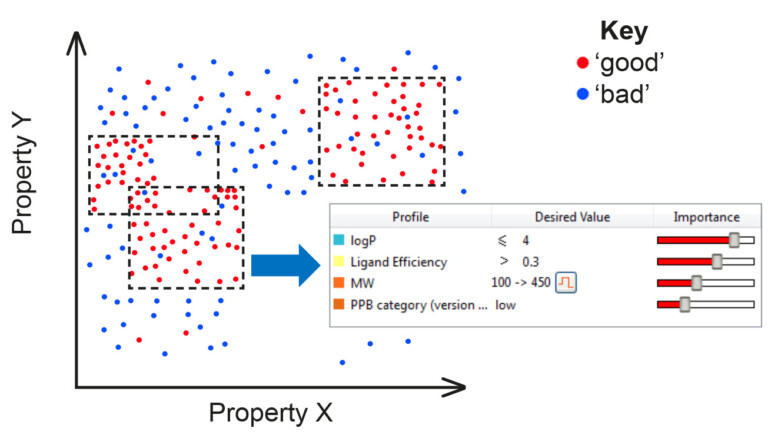
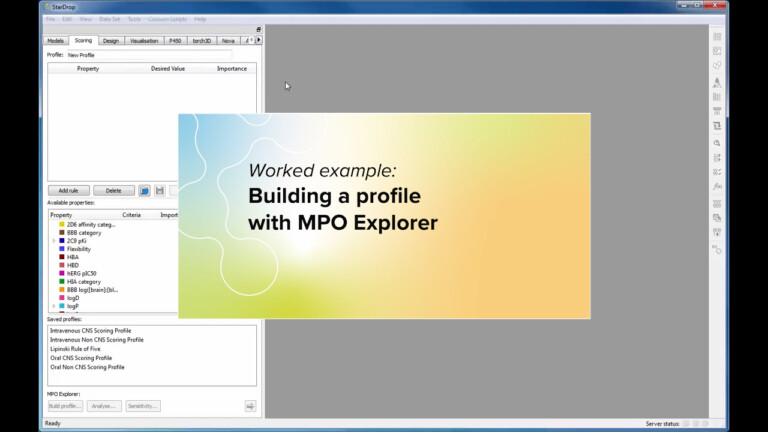
In this example we will use the Profile Builder in StarDrop’s MPO Explorer module to derive a multi-parameter scoring profile, based on a CNS data set.
Introduction The emergence of resistance and increased stringency of regulatory requirements have created a need for new agrochemicals. The long…
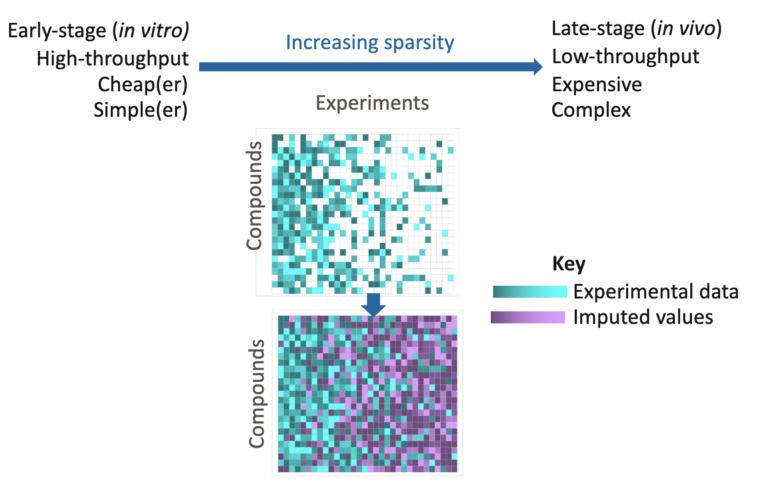
To guide drug design, it’s important to understand the likely ADME and physicochemical properties of your compounds at an early…

Recent years have seen a remarkable rise in the number and scope of artificial intelligence and machine learning (especially deep…

Develop advanced MPO strategies and target the right compounds, faster.
We’re diving back into our favourite subject: multi-parameter optimisation.

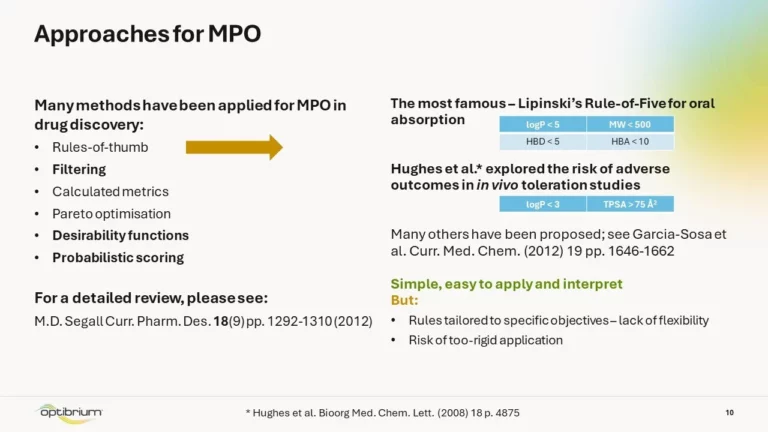
Successful drugs require a delicate balance of many properties, such as potency, ADME and toxicity, to meet a project’s therapeutic objective. To make decisions about compound progression and assay selection, the available data must be assessed against project-specific criteria. However, the data on which we base our decisions often come from different sources and can vary in quality, so how can we use this information to make confident decisions? In addition, how can we be sure that the criteria we’re using are the most appropriate?
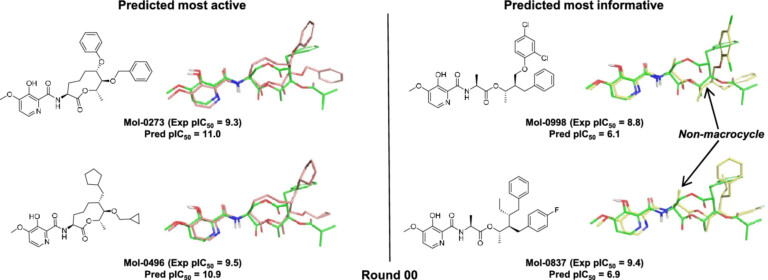
Scaffold replacement as part of an optimisation process that requires maintenance of potency, desirable biodistribution, metabolic stability, and considerations of synthesis at very large scale is a complex challenge.
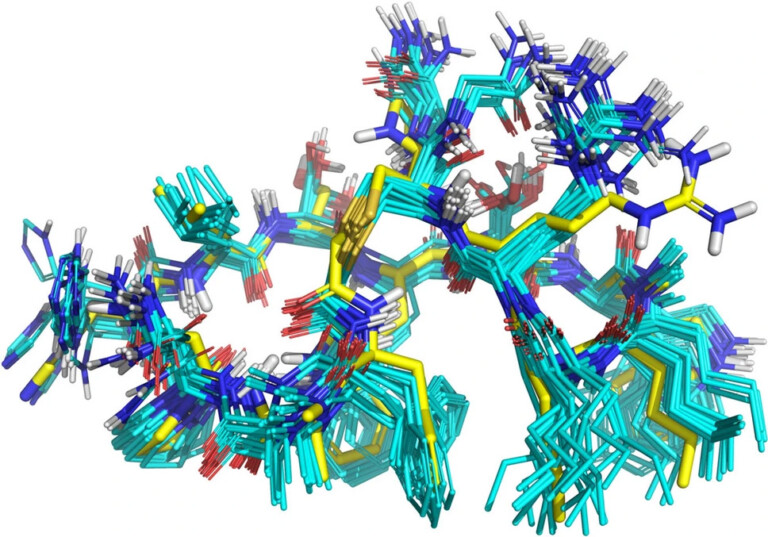
Systematic optimisation of large macrocyclic peptide ligands is a serious challenge. Here, we describe an approach for lead optimisation using the PD-1/PD-L1 system as a retrospective example of moving from initial lead compound to clinical candidate.
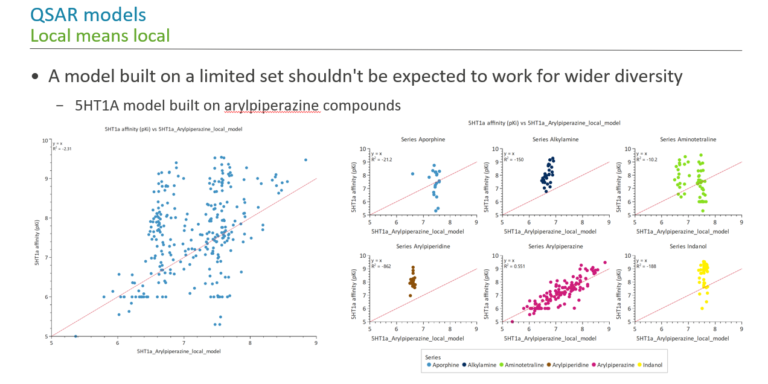
Virtual screening presents a host of challenges, especially where little or no structural information on targets is available. So how can we best set our screening strategies up for success?
This webinar describes example applications of multi-parameter optimisation to find high-quality lead compounds.
Introduction The increasing occurrence of multidrug-resistant bacteria is one of the major global threats to human health. Design of new…