Out now in Innovations in Pharmaceutical Technology, Optibrium’s Global Head of Application Science and President of Optibrium Inc, Dr Tamsin Mansley discusses the past, present and future of AI in drug discovery. She shares her thoughts on how AI technologies are best serving the drug discovery industry, how any limitations in the field are being tackled by innovations in technology and where the future of new drug discovery technologies look to be headed.
Introduction
For drug discovery, there are three key areas of chemistry in which artificial intelligence (AI) technologies can be applied: generative chemistry, synthesis planning and compound property prediction. Together, these cover which potential drug candidates could be considered, how to synthesise them, and whether they will have the required balance of properties to successfully meet the project’s objectives.
Want to use AI in your drug discovery projects?
About the author
Tamsin Mansley
Global Head of Application Science and President Optibrium Inc.

More AI in drug discovery resources
Real world case studies: Predicting pharmacokinetics from limited ADME data with deep learning
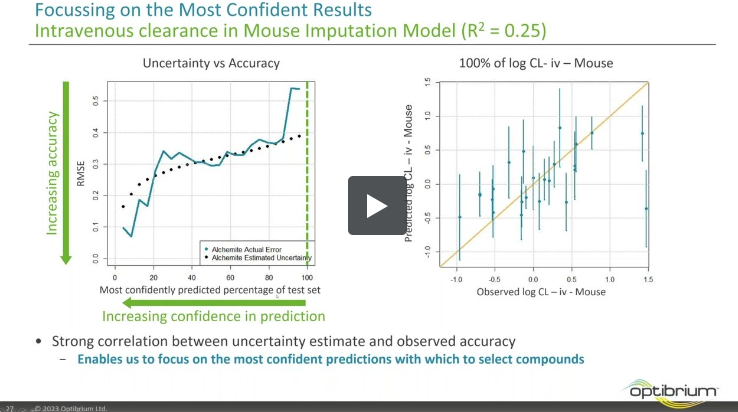
Now, watch Matt Segall, PhD, CEO at Optibrium, as he introduces a real world case study where we applied deep learning to guide a project, in which potential compounds were displaying good activity profiles but the team wanted to improve their PK profile to achieve better efficacy.
Private: Integrated AI synthesis prediction in drug discovery
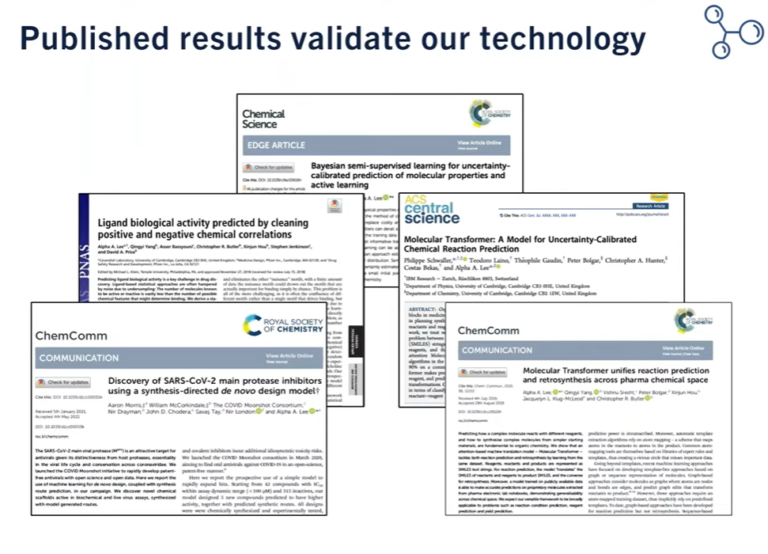
Learn more about how AI, machine learning and other computational tools can support the discovery process, bringing you feasible synthetic routes to your target compounds.
Cerella™: Reduce the time and cost of your discovery cycles with deep learning
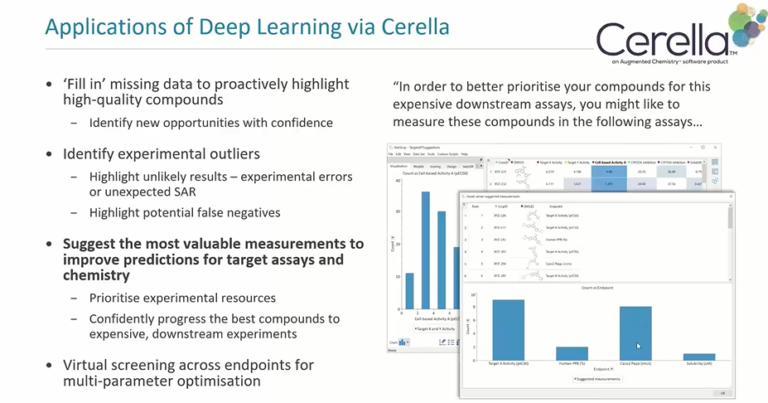
In this webinar, we demonstrate how Cerella™ (AI drug discovery software) highlights new opportunities and guides more efficient compound optimisation.
Related content from across the site
Optibrium Introduces Graphical Interface for QuanSA to Enhance Ligand-Based Affinity Predictions
New user interface provides visual insights to guide compound optimisation CAMBRIDGE, UK, 24 March 2026 – Optibrium, a leading developer of software and AI solutions for molecular design, today…
Optibrium Appoints Dr Nathan Brown as Director of Science
Newly created role underscores commitment to customer-driven research and scientific excellence CAMBRIDGE, UK, 13 January 2026 – Optibrium, a leading developer of software and AI…

Optibrium Delivers Real-Time Collaboration in its Comprehensive Molecular Design Platform with StarDrop 8
Latest release accelerates hit-to-candidate progression by keeping teams aligned, eliminating inefficiencies and enabling better prioritisation decisions CAMBRIDGE, UK, 04 November…